What inspired you to become an artist?
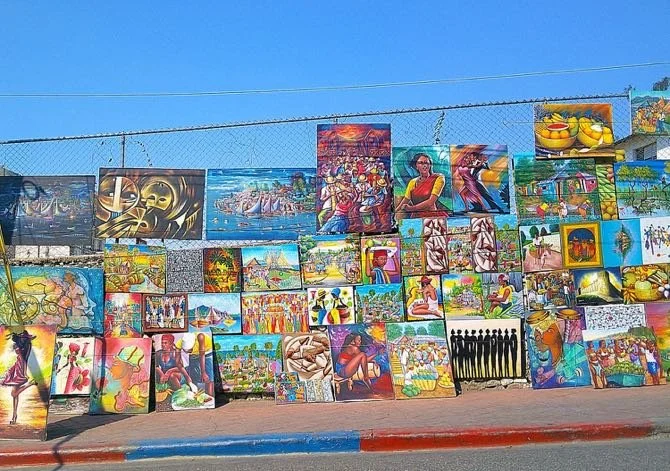
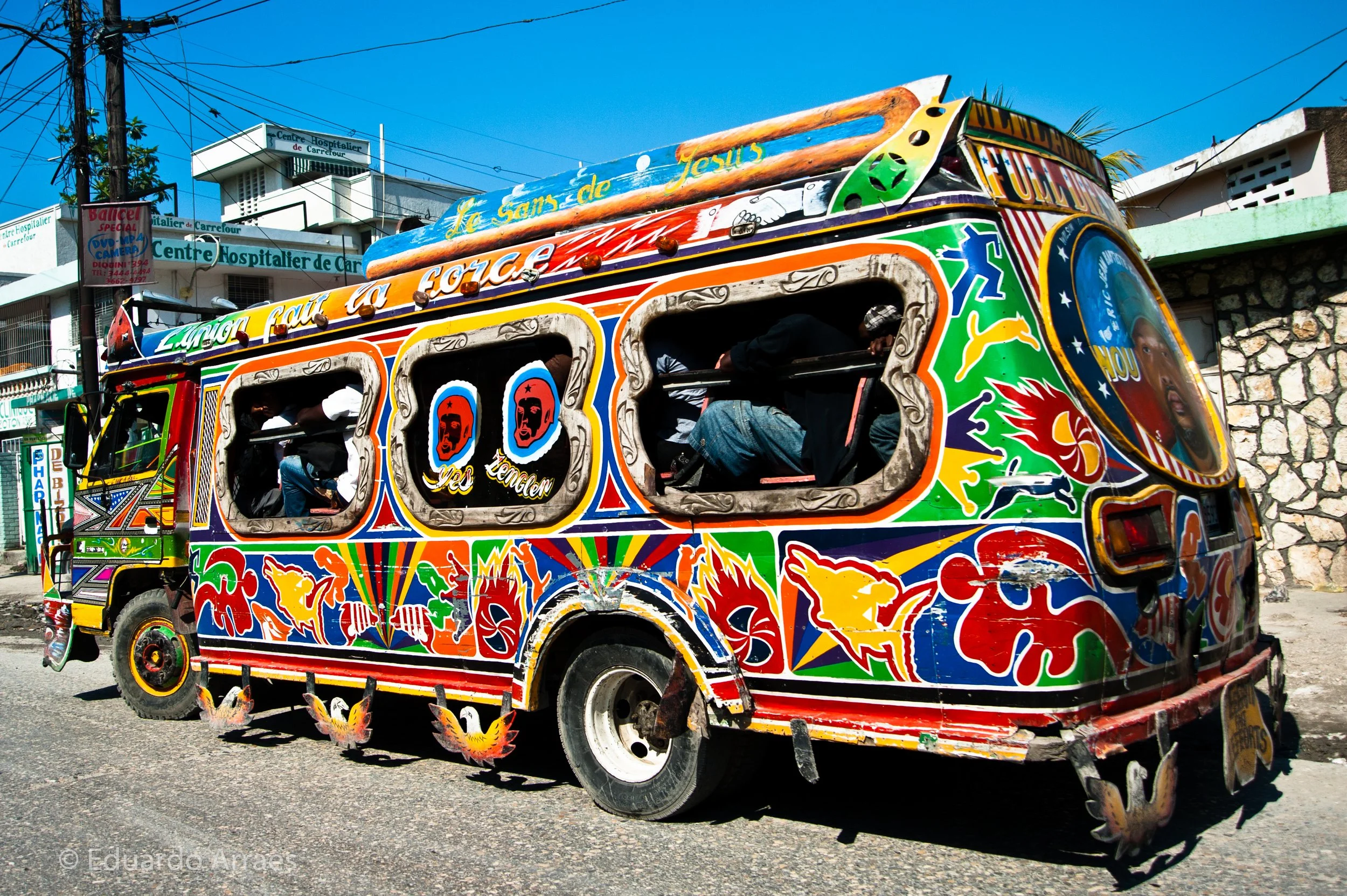
Growing up in Port-au-Prince, Haiti, I was surrounded by art. On the ride to school, I’d watch streets come alive with artists lining rows of oil paintings against tall fences. It’s like the Jackson Square, but imagine that all around a city. And I surely can’t forget about the taptaps outrunning the sun to fill up the streets. Taptaps are actually a form of public transport used throughout the country. They’re these privately owned remodeled trucks that are vibrantly decorated with colors, kaleidoscopic patterns, slogans, bible verses, ads, or anyone famous. You can’t miss them. Long story short, our creativity as a people is what really energized me to start drawing in the first place.
What do you love about creating visual art?
With art, the excitement for me is watching pieces of my mind concretize right in front of me. The rush is in the in between… in the anticipation… in the figuring it out. A lot of times, it feels like I’m watching a movie.
I’m very intentional with my art because I always want it to contribute useful energy into a space. When a viewer taps into my artwork, I want it to feel uplifting. I love that I’m able to do that.
Another enjoyable part about visual art is feeling through the materials. This is so therapeutic. Take for example the texture of acrylic paint, and what it feels like to move it across the canvas. 10 out of 10! I recommend.
Why did you start creating digitally?
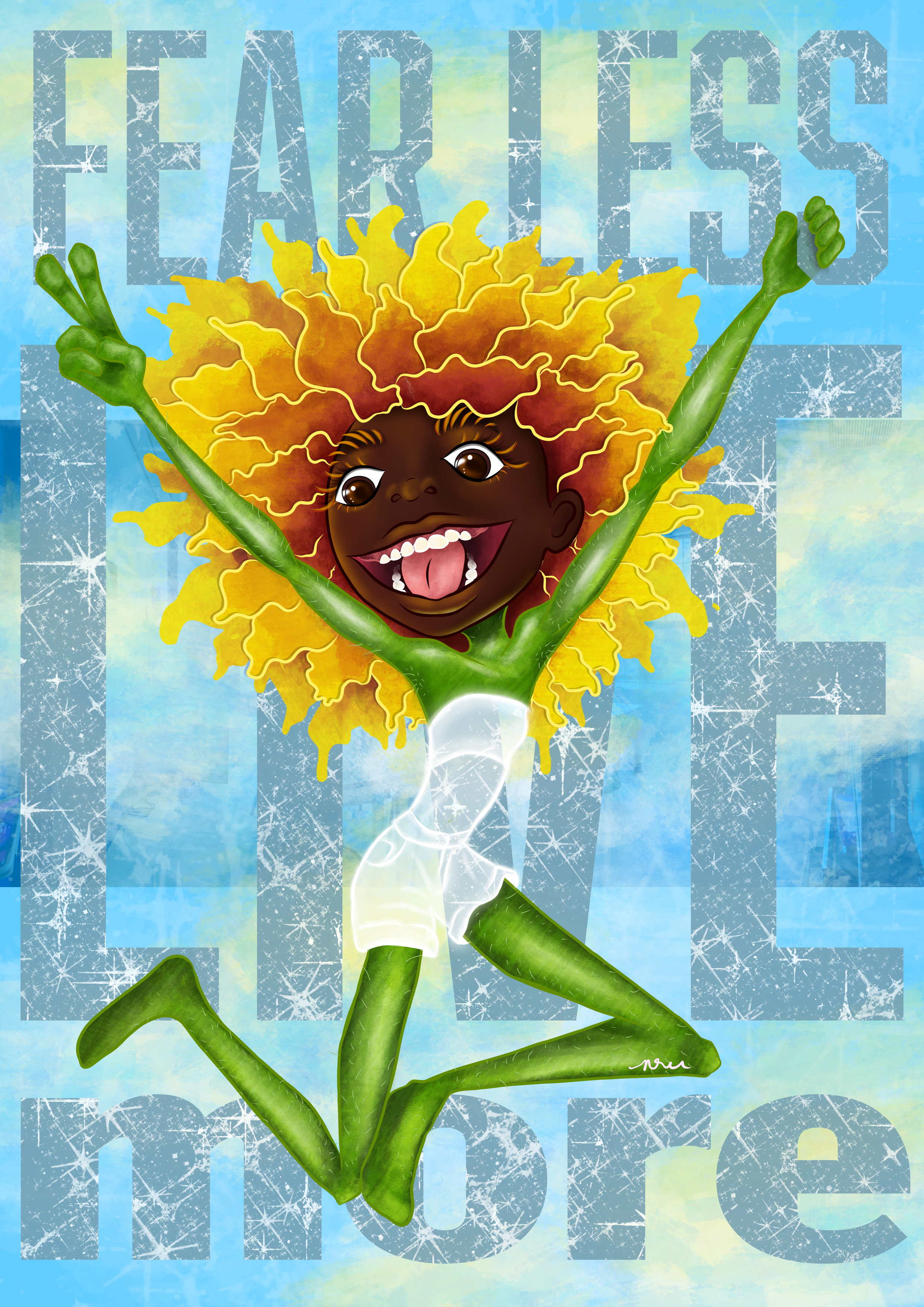
In 2019, my friend Omonyame challenged me to create the cover art to one of her songs. I was honored, and intrigued. As a hands-on learner, practice very quickly made progress. At first, it felt daunting to remember all of these different tools, or even where to find them but repetition is key. Digital art is definitely one of my favorite mediums today. And that is for one feature alone: the undo button. This tool is unmatched!
I don’t think it’s necessary to learn digital art. With the advancement of AI art these days, you may even think it’s pointless. But, just because calculators exist, doesn’t mean I shouldn’t learn to do math for myself. Ultimately, it improves dexterity. There’s a lot to play with creatively. And even though there’s a technological learning curve to it, it’s fun!
What is your biggest challenge as a teaching artist?
Art is not as black and white as ELA or Math. Realistically, art has little to no rules. So arguably, visual artists exist in the in-between. And, it is vast over here. With my students being very protective of their creative decisions, it meant that willing them to try something different was a daily obstacle. Unexpectedly, I spent a lot of time persuading some artists to stock up on certain skills (even when they don’t match their art styles). Are messy lines really your artistic choice or do you not yet know how to draw quality lines? Ultimately, the more you learn, the more creative options you have. It’s like having a box of 84 color markers instead of the box of 12. I feel though that it is becoming easier with time, as my students and I are building a bond with each other.
Any TIPS?
You can only grow as far as you believe you can.
Your art has to at least interest you. So, always choose ideas that will keep you locked in.
Not everyone will be into your work, and that’s okay. You don’t like everyone’s art either.
Receiving feedback doesn’t mean you’re betraying yourself. It doesn’t mean you have to follow any of it either, but at the least you should reflect on it.
Accept that someone will always be better than you, and you’ll always be better than someone else.
There’s no right or wrong way to create. But practicing the foundational skills is key to your creative self-discovery.
Play with different mediums.
It’s even better to grow slowly. Be patient with yourself.